Healthy foods are the foundation of a healthy lifestyle. The foods you choose every day affect your energy levels, immune system, heart health, brain function, and overall well-being. A balanced diet filled with nutritious ingredients can reduce the risk of chronic diseases while helping you maintain a healthy weight and feel your best.
Whether your goal is to lose weight, improve digestion, build muscle, or simply develop better eating habits, adding more healthy foods to your meals is one of the smartest decisions you can make.
In this comprehensive guide, you’ll learn what healthy foods are, their benefits, the best healthy foods to include in your diet, and practical tips for creating balanced meals.
What Are Healthy Foods?
Healthy foods are natural, nutrient-dense foods that provide your body with vitamins, minerals, protein, fiber, healthy fats, and complex carbohydrates without excessive amounts of added sugar, sodium, or unhealthy fats.
Healthy foods include:
- Fresh fruits
- Vegetables
- Whole grains
- Lean proteins
- Nuts and seeds
- Legumes
- Dairy or dairy alternatives
- Healthy oils
- Seafood
These foods nourish your body while supporting long-term health.

Why Healthy Foods Matter
Eating healthy foods regularly offers many health benefits.
1. Improve Heart Health
Healthy foods such as leafy greens, fish, oats, berries, and nuts help lower cholesterol and support healthy blood pressure.
2. Strengthen the Immune System
Foods rich in vitamins A, C, D, E, and zinc help your body fight infections naturally.
3. Support Weight Management
High-fiber foods keep you full longer, reducing unnecessary snacking.
4. Increase Energy
Whole foods provide steady energy without the crashes caused by sugary snacks.
5. Better Digestion
Fiber-rich foods improve gut health and prevent constipation.
6. Reduce Disease Risk
A healthy diet may lower the risk of:
- Type 2 diabetes
- Heart disease
- Stroke
- Obesity
- Certain cancers
Top 20 Healthy Foods You Should Eat
1. Spinach
Spinach is packed with:
- Iron
- Vitamin A
- Vitamin C
- Calcium
- Antioxidants
It supports eye health and strengthens the immune system.
2. Broccoli
Broccoli contains:
- Fiber
- Vitamin K
- Vitamin C
- Folate
It supports digestion and may help protect against chronic diseases.
3. Blueberries
Blueberries are rich in antioxidants that help protect cells from damage.
Benefits include:
- Better brain health
- Heart protection
- Reduced inflammation
4. Apples
An apple a day truly offers many benefits.
Apples contain:
- Fiber
- Vitamin C
- Potassium
They’re a great healthy snack.
5. Bananas
Bananas provide:
- Potassium
- Vitamin B6
- Natural carbohydrates
Perfect before workouts for sustained energy.
6. Oats
Oats are one of the healthiest whole grains.
Benefits include:
- Lower cholesterol
- Better digestion
- Long-lasting energy
7. Brown Rice
Brown rice contains more fiber and nutrients than white rice.
It supports:
- Healthy digestion
- Blood sugar control
- Heart health
8. Salmon
Salmon is a great way to get omega-3 fatty acids.
Benefits include:
- Brain health
- Heart health
- Reduced inflammation
9. Eggs
Eggs provide:
- High-quality protein
- Choline
- Vitamin D
- Healthy fats
They make an excellent breakfast option.
10. Greek Yogurt
Greek yogurt is high in:
- Protein
- Calcium
- Probiotics
It supports gut health and muscle recovery.
11. Almonds
Almonds contain:
- Vitamin E
- Healthy fats
- Magnesium
- Protein
Eat a small handful as a healthy snack.
12. Walnuts
Walnuts are rich in omega-3 fatty acids and antioxidants.
They’re excellent for brain health.
13. Chia Seeds
These tiny seeds are nutritional powerhouses.
Rich in:
- Fiber
- Protein
- Omega-3 fats
- Calcium
14. Lentils
Lentils are affordable and highly nutritious.
They provide:
- Protein
- Iron
- Fiber
- Folate
15. Chickpeas
Chickpeas support:
- Healthy digestion
- Weight management
- Blood sugar control
16. Sweet Potatoes
Sweet potatoes contain:
- Vitamin A
- Potassium
- Fiber
A healthier alternative to regular fries.
17. Avocados
Avocados provide healthy monounsaturated fats.
Benefits include:
- Healthy skin
- Better heart health
- Improved nutrient absorption
18. Tomatoes
Tomatoes contain lycopene, an antioxidant linked to heart health.
19. Garlic
Garlic has natural compounds that may support immunity and heart health.
20. Green Tea
Green tea contains antioxidants that may support metabolism and overall wellness.
Healthy Foods for Breakfast
Start your day with nutrient-rich choices:
- Oatmeal with berries
- Greek yogurt and fruit
- Whole-grain toast with avocado
- Scrambled eggs with spinach
- Smoothies made with fruits and yogurt
Healthy Lunch Ideas
Choose balanced meals such as:
- Grilled chicken salad
- Brown rice with vegetables
- Lentil soup
- Turkey sandwich on whole-grain bread
- Quinoa bowl with roasted vegetables
Healthy Dinner Ideas
Nutritious dinner options include:
- Grilled salmon with broccoli
- Stir-fried vegetables and tofu
- Chicken with sweet potatoes
- Vegetable soup
- Whole-wheat pasta with vegetables
Healthy Snacks
Replace processed snacks with:
- Apples
- Bananas
- Mixed nuts
- Carrot sticks
- Hummus
- Cottage cheese
- Greek yogurt
- Fresh berries
Foods to Limit
For better health, reduce your intake of:
- Sugary drinks
- Candy
- Fried foods
- Processed meats
- Packaged snacks
- Refined white bread
- Pastries
- Fast food
Enjoy these foods occasionally rather than as everyday staples.
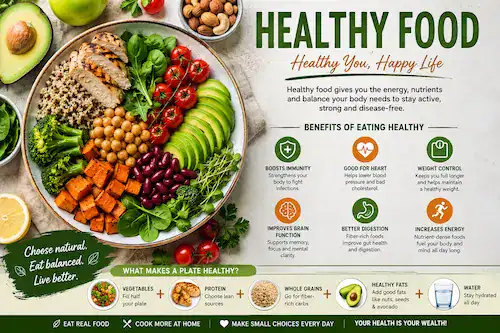
How to Build a Healthy Plate
A simple guide:
- Half the plate: Vegetables and fruits
- One-quarter: Lean protein
- One-quarter: Whole grains
- Add a serving of healthy fats, such as avocado, olive oil, or nuts.
Healthy Eating Tips
- Drink plenty of water throughout the day.
- Eat more home-cooked meals.
- Read nutrition labels.
- Include a variety of colorful fruits and vegetables.
- Control portion sizes.
- Limit added sugar and sodium.
- Choose whole grains over refined grains.
- Plan meals in advance to avoid unhealthy choices.
Common Healthy Eating Mistakes
Avoid these common pitfalls:
- Skipping breakfast
- Eating too many processed “diet” foods
- Drinking sugary beverages
- Ignoring portion sizes
- Not eating enough vegetables
- Relying on supplements instead of whole foods
Sample One-Day Healthy Meal Plan
| Meal | Food |
| Breakfast | Oatmeal with blueberries and almonds |
| Snack | Apple with peanut butter |
| Lunch | Grilled chicken, brown rice, and broccoli |
| Snack | Greek yogurt with chia seeds |
| Dinner | Baked salmon, quinoa, and spinach salad |
| Dessert | Fresh berries |
Frequently Asked Questions
What are the healthiest foods to eat every day?
Some of the healthiest options include leafy greens, berries, oats, eggs, salmon, beans, nuts, yogurt, and whole grains.
Can healthy foods help with weight loss?
Yes. Healthy foods that are high in protein and fiber can help you feel full longer, making it easier to manage calorie intake as part of an overall balanced diet.
How much fruit should I eat daily?
Most adults benefit from about 1½–2 cups of fruit per day, depending on age, sex, and activity level.
Is it okay to eat healthy snacks?
Absolutely. Healthy snacks such as fruit, yogurt, nuts, and vegetables can help maintain energy between meals.
Are frozen vegetables healthy?
Yes. Frozen vegetables often retain their nutrients and are a convenient option when fresh produce isn’t available.
Conclusion
Healthy foods are the cornerstone of a balanced lifestyle. By filling your plate with fruits, vegetables, whole grains, lean proteins, legumes, nuts, and healthy fats, you provide your body with the nutrients it needs to thrive. Small, consistent changes—such as choosing water over sugary drinks or adding an extra serving of vegetables to dinner—can make a meaningful difference over time.
Healthy eating doesn’t require perfection. Focus on variety, balance, and moderation, and you’ll be well on your way to supporting your long-term health and well-being.