
Introduction
Most people think sunscreen is only important during vacations, beach trips, or extremely hot summer days. In reality, the sun affects human skin every single day, even when the weather seems pleasant or cloudy. The damage caused by ultraviolet rays often happens slowly and silently. A person may not notice the effects immediately, but over the years the skin begins to show signs of stress through wrinkles, uneven tone, tanning, dullness, and dark spots.
Sunscreen is not just another skincare trend. It is one of the few products that dermatologists across the world consistently recommend for every skin type and every age group. Whether someone spends time outdoors, drives daily, works near windows, or simply walks outside for a few minutes, the skin remains exposed to harmful rays.
Modern lifestyles have increased awareness about skincare, but many people still misunderstand sunscreen. Some believe darker skin does not require protection. Others think sunscreen blocks vitamin D completely. Many apply it only once in the morning and expect all-day protection.
This article explains sunscreen from a practical and human perspective — why it matters, how it protects the skin, how to choose the right one, mistakes people commonly make, and why sunscreen has become one of the smartest long-term investments for healthy skin.
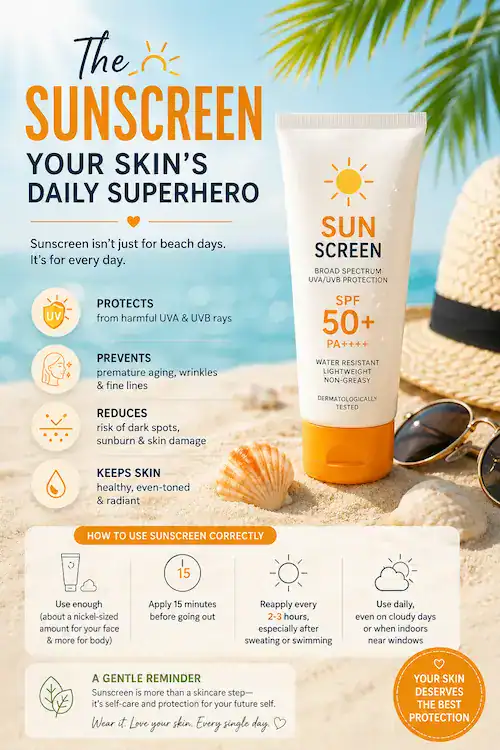
The Science Behind Sun Damage
The sun emits ultraviolet radiation that reaches the earth in two major forms:
UVA Rays
These rays penetrate deeply into the skin layers. They are strongly linked with:
- Premature aging
- Loss of skin elasticity
- Wrinkles
- Fine lines
- Pigmentation
UVA rays remain active throughout the year and can even pass through glass windows.
UVB Rays
UVB rays mainly affect the outer layer of the skin and are responsible for:
- Sunburn
- Redness
- Skin irritation
- Cellular damage
Both UVA and UVB rays can harm skin cells over time.
What Exactly Does Sunscreen Do?
Sunscreen acts like a protective shield between the skin and ultraviolet radiation. Different formulas work differently.
Some absorb harmful rays before they penetrate the skin. Others create a physical layer that reflects sunlight away from the skin surface.
Without sunscreen, the skin remains directly exposed to environmental stress. Over time this exposure weakens the skin barrier and accelerates visible aging.
Daily sunscreen use helps preserve healthier-looking skin for years.
Why Sunscreen Matters More Today Than Ever Before
Environmental changes, rising temperatures, pollution, and increased outdoor exposure have made sunscreen more important than previous generations realized.
Today people also spend more time under artificial light sources and in front of screens. Although digital screens are not as dangerous as direct sunlight, modern sunscreens now include protection against environmental stress and blue light exposure.
Skincare is no longer only about appearance. It is increasingly connected to overall skin health.
Signs Your Skin Is Suffering From Sun Exposure
Many people fail to recognize early signs of sun damage.
Common warning signs include:
- Skin becoming dull quickly
- Uneven complexion
- Persistent tanning
- Dry or rough texture
- Early wrinkles around the eyes
- Brown spots or patches
- Increased skin sensitivity
These issues often develop gradually.
SPF Explained in Simple Words
SPF means Sun Protection Factor.
It mainly measures protection against UVB rays.
Understanding SPF Levels
| SPF | Approximate UVB Protection |
| SPF 15 | About 93% |
| SPF 30 | About 97% |
| SPF 50 | About 98% |
No sunscreen blocks sunlight completely.
For everyday use, SPF 30 is generally considered effective for most people.
Different Forms of Sunscreen
Sunscreen products come in various textures and styles now.
Cream Sunscreen
Best for dry skin because it provides hydration.
Gel Sunscreen
Popular among people with oily or acne-prone skin.
Spray Sunscreen
Convenient for body application but must be applied carefully for even coverage.
Stick Sunscreen
Useful around sensitive areas like lips, nose, and under-eye corners.
Powder Sunscreen
Mostly used for touch-ups during the day.
Mineral vs Chemical Sunscreen
This topic often confuses buyers.
Mineral Sunscreen
Mineral sunscreen uses ingredients like zinc oxide and titanium dioxide.
Benefits:
- Gentle on sensitive skin
- Starts working immediately
- Lower irritation risk
Drawbacks:
- May leave a white layer on darker skin tones
- Texture can feel thicker
Chemical Sunscreen
UV photons are absorbed by chemical formulae and transformed into heat.
Benefits:
- Lightweight finish
- Blends easily
- Works well under makeup
Drawbacks:
- Can irritate sensitive skin
- Sometimes causes eye stinging
Both types can be effective when used correctly.
How to Select the Right Sunscreen
Choosing sunscreen should depend on skin needs rather than marketing trends.
For Oily Skin
Look for:
- Oil-free formulas
- Matte finish
- Gel texture
- Non-comedogenic labels
For Dry Skin
Choose formulas containing:
- Ceramides
- Glycerin
- Hyaluronic acid
For Sensitive Skin
Mineral sunscreens are usually safer and calmer.
For Outdoor Sports
Water-resistant sunscreen works better during sweating and swimming.
The Biggest Sunscreen Mistake People Make
Most individuals simply do not apply enough sunscreen.
A tiny amount spread across the face cannot provide the SPF written on the bottle.
Dermatologists usually recommend:
- Two-finger length for the face
- Full-body coverage when outdoors
Insufficient application reduces protection dramatically.
How to Apply Sunscreen Properly
Just as important as the product itself is proper application.
Step 1
Apply sunscreen after moisturizer but before makeup.
Step 2
Wait around 15 minutes before stepping into sunlight.
Step 3
Cover commonly missed areas:
- Ears
- Neck
- Hands
- Feet
- Hairline
Step 4
Reapply every two hours during sun exposure.
Why Indoor Workers Still Need Sunscreen
A common misconception is that sunscreen is unnecessary indoors.
However:
- UVA rays can pass through windows
- Long driving hours expose skin to sunlight
- Office windows still allow UV penetration
People sitting near windows daily may experience uneven skin aging over time.

Sunscreen and Skin Tone
Every skin tone needs sun protection.
Darker skin contains more melanin, which provides some natural defense, but it does not completely prevent:
- Pigmentation
- Sunburn
- Skin aging
- UV damage
Ignoring sunscreen because of skin tone can still lead to long-term damage.
The Connection Between Sunscreen and Anti-Aging
Many expensive skincare products lose effectiveness if sunscreen is skipped.
UV exposure breaks down collagen, which keeps the skin firm and youthful.
Without sun protection:
- Wrinkles appear earlier
- Fine lines deepen faster
- Dark spots become stubborn
- Skin texture weakens
Sunscreen is often more valuable than luxury creams when it comes to preserving youthful skin.
Common Myths About Sunscreen
Myth 1: Sunscreen Is Only Needed in Summer
UV rays exist throughout the year.
Myth 2: Cloudy Weather Means No Sun Damage
Clouds cannot fully block UV radiation.
Myth 3: One Morning Application Is Enough
Sweat, oil, and environmental exposure reduce sunscreen effectiveness.
Myth 4: Sunscreen Makes Skin Darker
Sunscreen protects skin from tanning rather than causing darkness.
Myth 5: Men Do Not Need Sunscreen
Sun damage affects everyone regardless of gender
Sunscreen for Teenagers and Young Adults
Many teenagers ignore sunscreen because they focus only on acne treatments.
However, sun exposure can worsen:
- Acne marks
- Redness
- Post-inflammatory pigmentation
Using sunscreen early in life can help maintain healthier skin later.
Does Sunscreen Cause Acne?
Not necessarily.
Heavy or greasy formulas may clog pores in some people, but modern sunscreens are often designed specifically for acne-prone skin.
Look for labels such as:
- Non-comedogenic
- Oil-free
- Lightweight
How Sunscreen Supports Skin Recovery
People using treatments like:
- Retinol
- Chemical exfoliants
- Vitamin C
- Acne medication
become more sensitive to sunlight.
Without sunscreen, these treatments may actually worsen irritation and pigmentation.
The Emotional Side of Skin Protection
Healthy skin often improves confidence.
People who consistently protect their skin usually experience:
- More even complexion
- Reduced tanning
- Better makeup finish
- Less irritation
Good skincare habits also create discipline and self-care awareness.
Sunscreen and Children
Children’s skin is thinner and more delicate.
Experts usually recommend:
- SPF 30 or higher
- Mineral-based formulas
- Protective clothing
- Hats and shade
Young skin burns faster than adult skin.
Eco-Friendly Sunscreen Choices
Awareness about environmental safety has increased.
Some sunscreens contain ingredients believed to affect marine ecosystems.
Eco-conscious buyers now prefer:
- Reef-safe sunscreen
- Mineral formulas
- Sustainable packaging
The beauty industry is slowly shifting toward safer environmental practices.
Habits That Improve Sun Protection
Sunscreen works best when combined with healthy habits.
Wear Sunglasses
Protects the sensitive eye area.
Use Hats
Wide-brim hats reduce direct facial exposure.
Avoid Midday Sun
Sunlight becomes strongest between late morning and afternoon.
Stay Hydrated
Hydration supports healthier skin function.
The Future of Sunscreen
Modern sunscreen innovation focuses on:
- Invisible texture
- Lightweight feel
- Better compatibility with makeup
- Improved protection against pollution
- Long-lasting wear
Future skincare technology may create even smarter UV defense systems.
Frequently Asked Questions (FAQs)
1. Can sunscreen be used every day?
Yes. Daily use is highly recommended.
2. Which SPF is best for regular use?
SPF 30 is suitable for most people.
3. Does sunscreen stop tanning completely?
It reduces tanning but may not prevent it entirely.
4. Is sunscreen necessary indoors?
Yes, especially near windows.
5. Can oily skin use sunscreen?
Absolutely. Gel-based formulas work well for oily skin.
6. How often should sunscreen be reapplied?
Every two hours during sun exposure.
7. Is sunscreen safe for sensitive skin?
Mineral sunscreen is usually preferred for sensitive skin.
8. Can sunscreen expire?
Yes. Expired sunscreen should be replaced.
9. Does sunscreen prevent wrinkles?
Regular use helps slow visible aging.
10. Should men use sunscreen too?
Yes. Sun damage affects everyone.
11. Can sunscreen be worn under makeup?
Yes. It should be applied before makeup.
12. Is expensive sunscreen always better?
Not necessarily. Proper usage matters more.
13. What is broad-spectrum sunscreen?
It protects against both UVA and UVB rays.
14. Can children use adult sunscreen?
Special children’s formulas are usually safer.
15. Is sunscreen important during winter?
Yes. UV rays remain active year-round.
Conclusion
Sunscreen is not just another optional skincare product sitting on a shelf. It is one of the most important tools for maintaining healthier, stronger, and younger-looking skin.
The effects of sunlight are cumulative. Small amounts of daily exposure add up over the years, often leading to visible aging and skin damage. Using sunscreen consistently is one of the simplest habits that can create long-term benefits.
Healthy skin does not depend only on expensive products or complicated routines. Sometimes the most powerful skincare decision is also the most basic one.
Protecting the skin today helps preserve its health, appearance, and strength for the future.